Lake Worth Beach Historic District COA Rules, Explained
August 13, 2026
August 13, 2026
A new Florida law took effect this summer that lets homeowners skip the building permit on small projects, the kind that used to mean a trip to City Hall for a new fence or a weekend pergola. If your bungalow sits inside one of Lake Worth Beach's historic districts, other city approvals may still apply even when a building permit is exempt.
Starting July 1, 2026, Florida House Bill 803 allows certain residential projects valued under $7,500 to qualify for a building permit exemption, but property owners must apply for and receive approval from the City before beginning work. The exemption is not a blanket pass. The City of Lake Worth Beach's Building Division will review exemption requests to determine eligibility, while the Planning & Preservation Division will ensure projects comply with zoning, landscaping, tree protection, and historic preservation requirements when applicable. That distinction may matter to homeowners listing or closing on a century-old bungalow.
The projects that qualify are the small, cosmetic ones. CBS 12 reports that projects that may qualify for a building permit exemption include interior painting, flooring replacement, cabinet replacement without relocating plumbing, drywall repairs and other non-structural cosmetic improvements. Other projects, including patios, walkways, fences, driveways, gazebos, pergolas and certain sheds, may be exempt from the building permit process but could still require a zoning permit.
Here's the sentence that matters most for anyone in a historic district: even if a building permit is not required, projects may still need approval from the city's Planning & Zoning Office or Historic Preservation Office. City officials are encouraging homeowners to contact staff before starting any project to make sure all required approvals have been obtained. The state removed a permit. It did not remove a review.
Lake Worth Beach's own preservation ordinance settles the question directly. Its language covers any exterior work on a designated landmark or a property inside a historic district, and it applies whether or not a building permit is otherwise required. In plain terms, the COA requirement may still apply even when a project qualifies for a state-level permit exemption. A qualifying fence that no longer needs a building permit still needs a Certificate of Appropriateness if it sits on a contributing property.
Interior work gets more breathing room. No certificate of appropriateness shall be required for alteration, construction, reconstruction, restoration, renovation or demolition of the interiors of a building or structure unless such interiors have been included in the city survey, are open and accessible to the public and specifically called out. So a kitchen refresh behind closed doors is a different animal than a new porch railing facing the street.
And the timing sequence hasn't changed either: the City of Lake Worth Beach's historic-preservation forms say a Certificate of Appropriateness is required for all exterior alterations to structures in the City's historic districts and individually designated landmarks, and it is required before exterior work begins and before a building permit can be issued. If your project involves new construction, a demolition, or a change of use, a pre-application meeting is required, and it's strongly encouraged for major additions too.
Since adoption, Lake Worth Beach has designated six local historic districts and four individually significant structures, with several recognized by the National Register of Historic Places. Those six districts are College Park, Old Lucerne, Old Town Commercial District, Northeast Lucerne, Southeast Lucerne, and South Palm Park. If your address falls inside any of them, the HB 803 headline needs an asterisk.
This isn't a theoretical risk. The Building Division publishes a list of the most common reasons a permit review stalls, and a missing historic sign-off is on it by name. Plan review may be delayed due to an incomplete permit application, missing plan disciplines, plans not properly stamped or sealed, no up to date survey or site plan, improper setbacks or lot coverage, exceeding height requirements, inconsistencies between plans and product listings, missing accessibility documentation, or a lack of a Certificate of Appropriateness application if the property is located in a City historic district. Recent changes to Florida law mean that some projects may no longer require a building permit, but many of these projects must still comply with the City's Land Development Regulations and with the City's Historic Preservation Ordinance for properties in a designated Historic District.
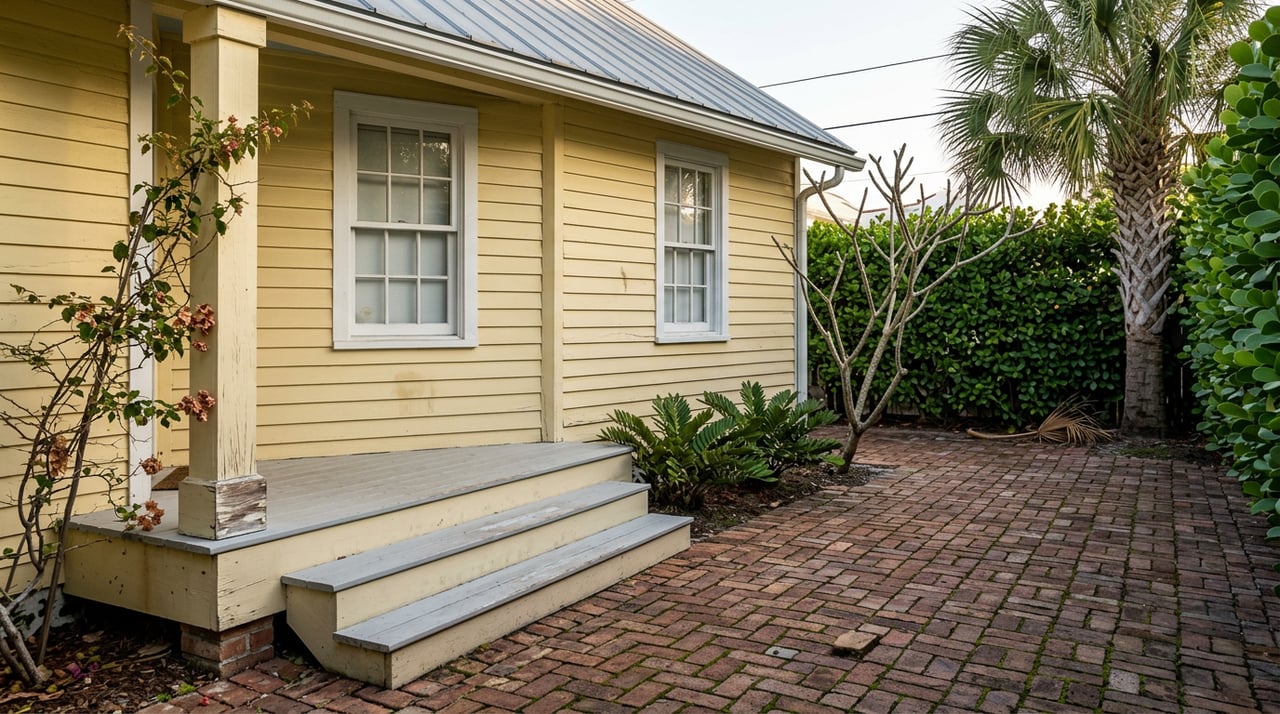
Picture a homeowner in College Park replacing a rotted backyard fence before listing. The job comes in under $7,500, so the HB 803 exemption looks like a clean win, no permit, no wait. But the fence faces a shared alley visible from a contributing structure next door, which puts it squarely inside COA territory. The listing photos were supposed to go up this week. Now they're waiting on a review the seller didn't know was still required.
Or picture a buyer under contract on a bungalow in Old Lucerne, negotiating a repair credit for a sagging pergola instead of a price reduction. The buyer assumes the $6,000 replacement is a same-week job under the new state rule. It isn't, because the property sits inside a historic district and the pergola faces the street. If the contract's repair-credit deadline is only a couple of weeks out, that assumption becomes a renegotiation.
Here's the comparison worth keeping on hand:
| HB 803 (state law) | Lake Worth Beach historic districts |
|---|---|
| Waives the building permit for qualifying projects under $7,500 | Still requires a Certificate of Appropriateness for exterior work, regardless of permit status |
| Exemption requests reviewed by the Building Division | COA reviewed by the Historic Preservation Division |
| Applies to eligible projects | Applies only inside the six designated districts and individually landmarked properties |
| Homeowner applies for the exemption before starting work | COA approval is required before exterior work begins and before a building permit can be issued |
A faster market does not necessarily shorten city review timelines. It just means a fixed-length approval process eats a bigger share of a shorter overall timeline. As of April 2026, the median home sale price in Lake Worth Beach stood at $495,000, with homes selling in an average of 111 days, down from 118 days a year earlier. Sales volume moved with it, climbing to 171 homes sold in that period compared to 40 a year prior.
Put those two numbers together and the mechanism becomes clear. When homes sat on the market for months, a two or three week COA review barely registered. In a market where deals are closing faster and more buyers are competing for the same inventory, that same review eats a much larger slice of the total transaction window. A seller who assumes HB 803 buys them a free weekend project is often the same seller who ends up pushing a listing date, or a buyer who ends up renegotiating a repair credit because the clock ran out before the paperwork did.
A short list worth running through before any exterior project on a historic-district property:
Does interior work in a historic district ever need a COA? Usually not. Interior changes are generally exempt unless the interior has been included in the city's survey, is open and accessible to the public, and is specifically called out.
My house is old but I'm not sure it's in a historic district. Does any of this apply to me? Only if your property falls inside one of the six designated districts or is individually landmarked. Check the city's zoning map viewer before assuming the HB 803 exemption applies cleanly or that it doesn't.
Who do I actually call first? Residents with questions can contact the Building Division at 561-586-1647, Planning & Zoning at 561-586-1687, or Historic Preservation at 561-586-1684.
If you're weighing a listing date, negotiating a repair credit, or planning a backyard project on a Lake Worth Beach bungalow, a building-permit exemption may not eliminate time needed for a required historic-preservation review. Amy Awerbuch has walked buyers and sellers through this exact timeline on College Park and Old Lucerne properties before, and knows which questions to ask the city before you're under contract instead of after. Get Your Free Home Valuation and let's map out your specific timeline before you list, buy, or start swinging a hammer.
This article is general information, not legal, tax or financial advice. Consult a qualified professional about your situation.
October 15, 2026
October 8, 2026
October 1, 2026
September 24, 2026
September 17, 2026
September 10, 2026
September 3, 2026
August 27, 2026
August 20, 2026
Amy Awerbuch has truly experienced the world of Real Estate from many unique perspectives, from marketing home furnishings for a major Midwest Design Center to selling and listing high-end residential properties and owning and managing an Arizona luxury vacation rental in Cave Creek.